Welcome back!
Ready to check out?
You're just one click away from fantastic style and even better savings!
The song "" (As We Cry) by Ahmet Kaya is one of the most culturally significant and emotionally resonant pieces in Turkish music history. Released in 1994 as part of the record-breaking album Şarkılarım Dağlara , the song transcends simple categorization, blending elements of folk, protest music, and deep personal melancholy. Origins and Composition
: Because of its haunting melody, the song has been recorded in multiple languages, including a popular Greek version titled " Meno Ektos " by Eleftheria Arvanitaki. Thematic Analysis
While Ahmet Kaya’s soulful, gravelly voice defined the track, its origins are a testament to cross-cultural artistic collaboration:
: The melody was composed by Ara Dinkjian , a renowned Armenian-American musician. The tune was originally an instrumental piece titled " Picture ," composed in 1986.
: The poignant words were written by Ahmet Kaya's wife, Gülten Kaya Hayaloğlu . Her lyrics often touch on themes of solitude, loss, and the shared pain of mothers and children caught in conflict.
The title, "Ağladıkça" (meaning "as we cry" or "the more we cry"), serves as a central motif for the song's message of endurance and hope through suffering.
The song "" (As We Cry) by Ahmet Kaya is one of the most culturally significant and emotionally resonant pieces in Turkish music history. Released in 1994 as part of the record-breaking album Şarkılarım Dağlara , the song transcends simple categorization, blending elements of folk, protest music, and deep personal melancholy. Origins and Composition
: Because of its haunting melody, the song has been recorded in multiple languages, including a popular Greek version titled " Meno Ektos " by Eleftheria Arvanitaki. Thematic Analysis
While Ahmet Kaya’s soulful, gravelly voice defined the track, its origins are a testament to cross-cultural artistic collaboration:
: The melody was composed by Ara Dinkjian , a renowned Armenian-American musician. The tune was originally an instrumental piece titled " Picture ," composed in 1986.
: The poignant words were written by Ahmet Kaya's wife, Gülten Kaya Hayaloğlu . Her lyrics often touch on themes of solitude, loss, and the shared pain of mothers and children caught in conflict.
The title, "Ağladıkça" (meaning "as we cry" or "the more we cry"), serves as a central motif for the song's message of endurance and hope through suffering.
*Discount applied on the current website price at the time of order. Offer only valid for new customer first contacts order over $10. Maximum discount of $100. Cannot be combined with any other offers. Promotions are subject to change without notice. We reserve the right to cancel orders that are in breach of the terms and conditions of this offer.



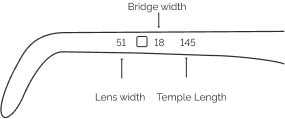
| Lens Width | Bridge Width | Temple Length | |
|---|---|---|---|
| XS | < 42 mm | < 16 mm | <=128 mm |
| S | 42 mm - 48 mm | 16 mm - 17 mm | 128 mm - 134 mm |
| M | 49 mm - 52 mm | 18 mm - 19 mm | 135 mm - 141 mm |
| L | >52 mm | >19 mm | >= 141 mm |
Buying eyewear should leave you happy and good-looking. Use our sizing tool to find frames that best fit your unique facial measurements.
Grab a regular card with a magnetic stripe on the back. Student IDs, credit cards and gift cards work well to start our online PD tool.
You may have received our paper PD measurement tool in your recent online order. In order to use this tool, place the ruler on your eyes so that the "0" lines up at the centre in between your eyes. Add up the two numbers, to get your PD. See example below:
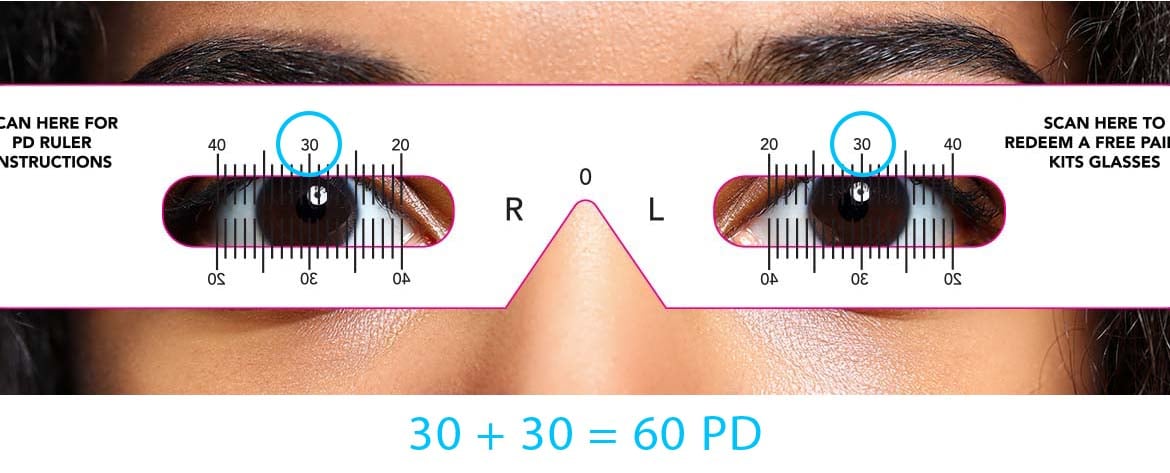
Click on this link to download and print your own PD measurement tool.
DOWNLOAD



 Check order status
 Place reorder
 Chat with us





 Use your insurance
 Help
Help