SPEECHTEXTER
...

Sum41 - In Too Deep (the String Quartet Tribute To Sum 41) May 2026

The transition from a high-octane rock track to a classical arrangement highlights the song's inherent "catchiness." In the original, the iconic opening riff is played with a clean, palm-muted electric guitar; in the tribute, this is replaced by the staccato plucking of violins and cellos. This change transforms the song’s vibe from a sun-drenched backyard party into something more sophisticated and cinematic. The driving power chords are replaced by rich, layered harmonies that provide a rhythmic "pulse" similar to the original drumming, proving that the energy of punk is more about composition than just volume.

The String Quartet Tribute version of Sum 41’s "In Too Deep" offers a fascinating study in how pop-punk energy translates into the world of chamber music. While the 2001 original is a definitive anthem of teenage angst and skate-culture rebellion, the instrumental reimagining by The Vitamin String Quartet (or similar tribute ensembles) strips away the distorted guitars and crashing cymbals to reveal the melodic strength at the song's core. sum41 - In Too Deep (The String Quartet Tribute to Sum 41)

Furthermore, the absence of Deryck Whibley’s vocals allows the listener to focus on the vocal melody as a purely musical line. When played on a violin, the melody takes on a more yearning, almost melancholic quality. The "In Too Deep" chorus, which usually invites a rowdy singalong, becomes a soaring, lyrical movement. It demonstrates that the songwriting of the early 2000s pop-punk era had more in common with classical structures—relying on strong hooks and clear resolutions—than many critics originally gave it credit for. The transition from a high-octane rock track to

Ultimately, the string quartet tribute serves as a bridge between two seemingly opposite worlds. It honors the nostalgia of the millennial generation while showcasing the versatility of the genre. By removing the "noise," the tribute proves that a great song remains great regardless of the instruments used to play it, turning a punk-rock staple into a piece of timeless instrumental art. The String Quartet Tribute version of Sum 41’s

SpeechTexter is a free multilingual speech-to-text application aimed at assisting you with transcription of notes, documents, books, reports or blog posts by using your voice. This app also features a customizable voice commands list, allowing users to add punctuation marks, frequently used phrases, and some app actions (undo, redo, make a new paragraph).

SpeechTexter is used daily by students, teachers, writers, bloggers around the world.

It will assist you in minimizing your writing efforts significantly.

Voice-to-text software is exceptionally valuable for people who have difficulty using their hands due to trauma, people with dyslexia or disabilities that limit the use of conventional input devices. Speech to text technology can also be used to improve accessibility for those with hearing impairments, as it can convert speech into text.

It can also be used as a tool for learning a proper pronunciation of words in the foreign language, in addition to helping a person develop fluency with their speaking skills.

using speechtexter to dictate a text

Accuracy levels higher than 90% should be expected. It varies depending on the language and the speaker.

No download, installation or registration is required. Just click the microphone button and start dictating.

Speech to text technology is quickly becoming an essential tool for those looking to save time and increase their productivity.
Features

Powerful real-time continuous speech recognition

Creation of text notes, emails, blog posts, reports and more.

Custom voice commands

More than 70 languages supported

Technology

SpeechTexter is using Google Speech recognition to convert the speech into text in real-time. This technology is supported by Chrome browser (for desktop) and some browsers on Android OS. Other browsers have not implemented speech recognition yet.

Note: iPhones and iPads are not supported

List of supported languages:

Afrikaans, Albanian, Amharic, Arabic, Armenian, Azerbaijani, Basque, Bengali, Bosnian, Bulgarian, Burmese, Catalan, Chinese (Mandarin, Cantonese), Croatian, Czech, Danish, Dutch, English, Estonian, Filipino, Finnish, French, Galician, Georgian, German, Greek, Gujarati, Hebrew, Hindi, Hungarian, Icelandic, Indonesian, Italian, Japanese, Javanese, Kannada, Kazakh, Khmer, Kinyarwanda, Korean, Lao, Latvian, Lithuanian, Macedonian, Malay, Malayalam, Marathi, Mongolian, Nepali, Norwegian Bokmål, Persian, Polish, Portuguese, Punjabi, Romanian, Russian, Serbian, Sinhala, Slovak, Slovenian, Southern Sotho, Spanish, Sundanese, Swahili, Swati, Swedish, Tamil, Telugu, Thai, Tsonga, Tswana, Turkish, Ukrainian, Urdu, Uzbek, Venda, Vietnamese, Xhosa, Zulu.

Instructions for web app on desktop (Windows, Mac, Linux OS)


Requirements: the latest version of the Google Chrome [↗] browser (other browsers are not supported).

1. Connect a high-quality microphone to your computer.

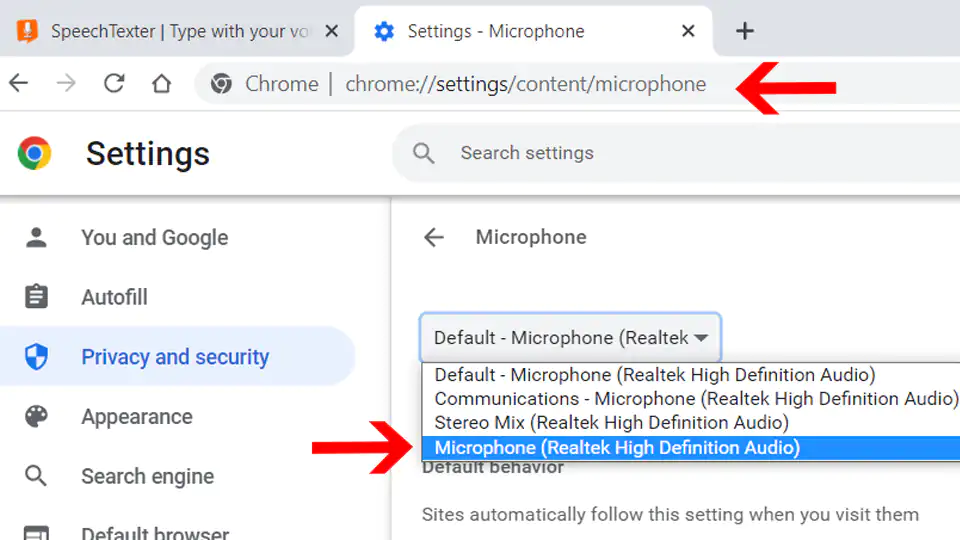
2. Make sure your microphone is set as the default recording device on your browser.

To go directly to microphone's settings paste the line below into Chrome's URL bar.

chrome://settings/content/microphone


Set microphone as default recording device

To capture speech from video/audio content on the web or from a file stored on your device, select 'Stereo Mix' as the default audio input.

3. Select the language you would like to speak (Click the button on the top right corner).

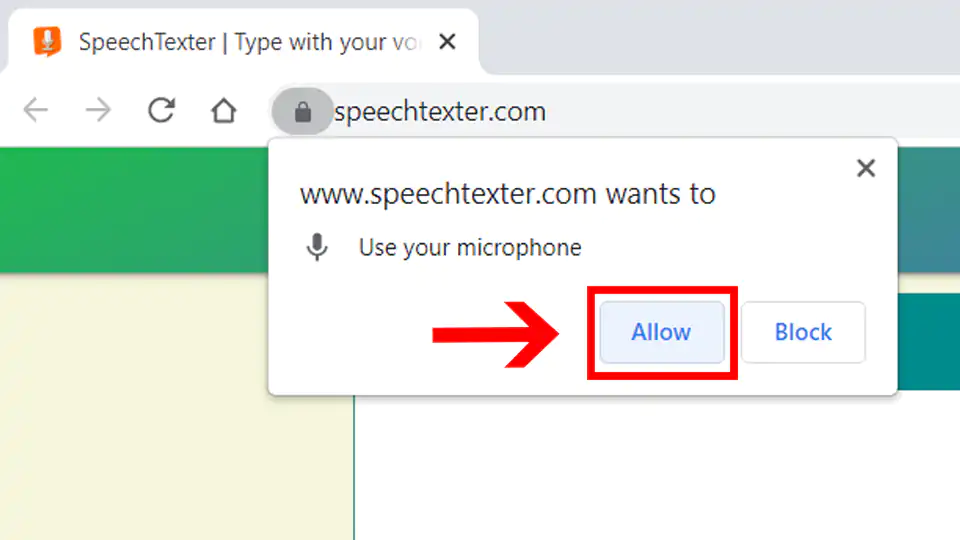
4. Click the "microphone" button. Chrome browser will request your permission to access your microphone. Choose "allow".

Allow microphone access

5. You can start dictating!

Instructions for the web app on a mobile and for the android app (the android app is no longer supported)


Requirements:
- Google app [↗] installed on your Android device.
- Any of the supported browsers if you choose to use the web app.

Supported android browsers (not a full list):
Chrome browser (recommended), Edge, Opera, Brave, Vivaldi.

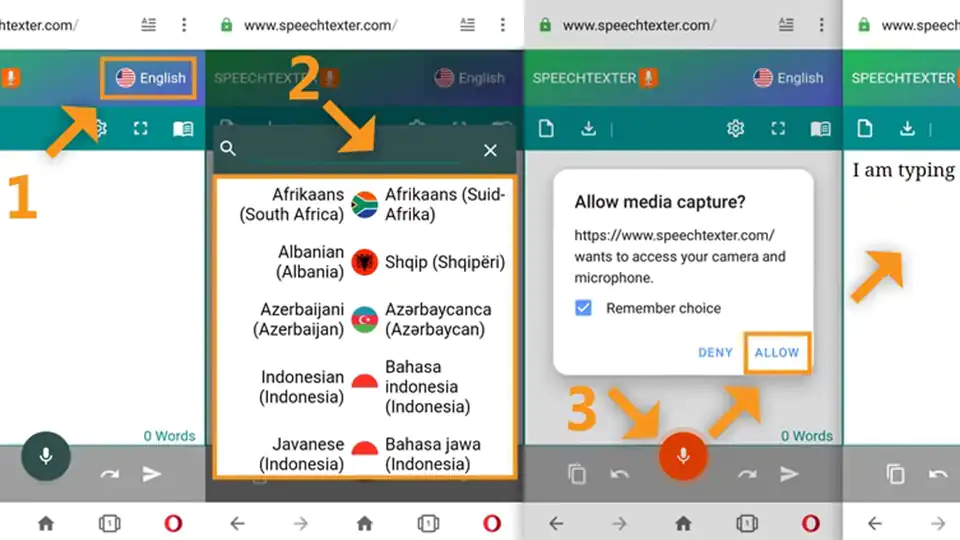
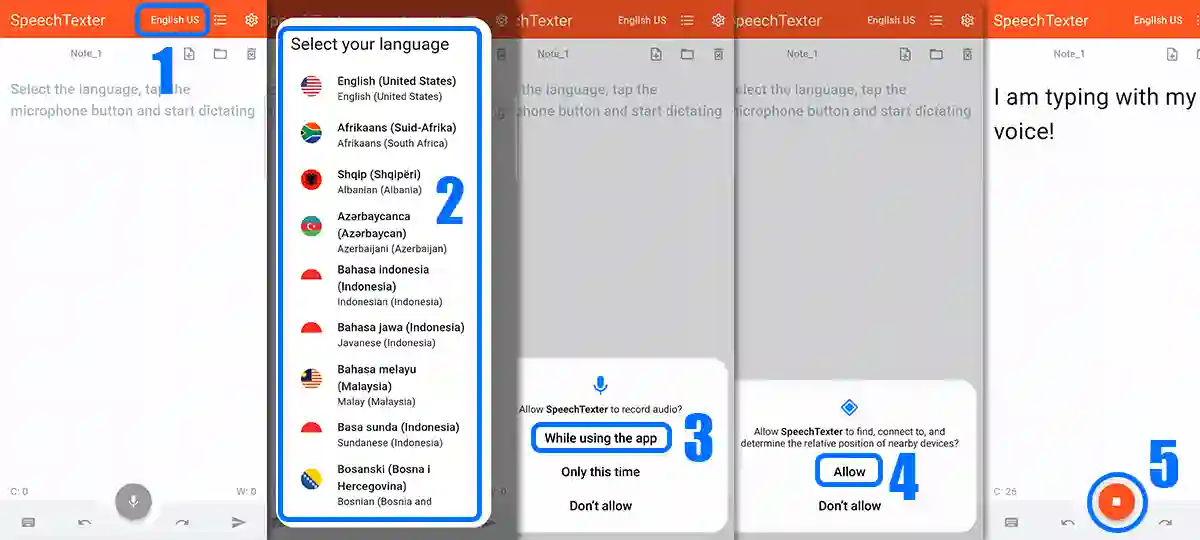
1. Tap the button with the language name (on a web app) or language code (on android app) on the top right corner to select your language.

2. Tap the microphone button. The SpeechTexter app will ask for permission to record audio. Choose 'allow' to enable microphone access.

instructions for the web app
web app

instructions for the android app
android app

3. You can start dictating!

The transition from a high-octane rock track to a classical arrangement highlights the song's inherent "catchiness." In the original, the iconic opening riff is played with a clean, palm-muted electric guitar; in the tribute, this is replaced by the staccato plucking of violins and cellos. This change transforms the song’s vibe from a sun-drenched backyard party into something more sophisticated and cinematic. The driving power chords are replaced by rich, layered harmonies that provide a rhythmic "pulse" similar to the original drumming, proving that the energy of punk is more about composition than just volume.

The String Quartet Tribute version of Sum 41’s "In Too Deep" offers a fascinating study in how pop-punk energy translates into the world of chamber music. While the 2001 original is a definitive anthem of teenage angst and skate-culture rebellion, the instrumental reimagining by The Vitamin String Quartet (or similar tribute ensembles) strips away the distorted guitars and crashing cymbals to reveal the melodic strength at the song's core.

Furthermore, the absence of Deryck Whibley’s vocals allows the listener to focus on the vocal melody as a purely musical line. When played on a violin, the melody takes on a more yearning, almost melancholic quality. The "In Too Deep" chorus, which usually invites a rowdy singalong, becomes a soaring, lyrical movement. It demonstrates that the songwriting of the early 2000s pop-punk era had more in common with classical structures—relying on strong hooks and clear resolutions—than many critics originally gave it credit for.

Ultimately, the string quartet tribute serves as a bridge between two seemingly opposite worlds. It honors the nostalgia of the millennial generation while showcasing the versatility of the genre. By removing the "noise," the tribute proves that a great song remains great regardless of the instruments used to play it, turning a punk-rock staple into a piece of timeless instrumental art.