Free Amsterdam Maps & Apps

maps & guides for free download and print

74 Max V8.1.5 | Cycling

Perhaps the most significant impact of the 8.1.5 update was its relationship with . As Ableton users demanded more complex devices, Max had to remain rock-solid. This version addressed specific compatibility issues, ensuring that custom-built MIDI effects and instruments performed predictably within the Live environment. For many producers, v8.1.5 was the silent engine that enabled a new wave of generative music tools and bespoke performance interfaces. Conclusion

The defining feature of Max 8 was the system, and v8.1.5 provided essential stability for this paradigm shift. Before MC, managing 16 voices of a synthesizer meant manually duplicating objects or using complex polyphony hacks. MC changed the game by allowing hundreds of channels of audio to flow through a single patch cord. Version 8.1.5 refined the behavior of MC-ready objects, ensuring that complex signal routing remained CPU-efficient. This allowed artists to create massive, immersive soundscapes that were previously too cumbersome to program. Vizzie 2 and Visual Integration Cycling 74 Max v8.1.5

While Max is often associated with audio, its visual component (Jitter) is equally vital. Max v8.1.5 continued to support , a collection of high-level video modules that utilize OpenGL for hardware-accelerated processing. This version ensured that the bridge between audio data and visual manipulation was more seamless than ever. A user could take the amplitude of an MC-signal and use it to modulate a 3D geometry in Jitter with minimal latency, a requirement for high-end professional installations. Integration with Ableton Live Perhaps the most significant impact of the 8

Max v8.1.5 arrived at a time when user experience was becoming as critical as raw processing power. One of the standout features of the Max 8 era was the massive improvement in UI responsiveness and the introduction of the "Patcher Launcher," which streamlined how users interacted with their projects. In v8.1.5, Cycling ’74 focused heavily on "quality of life" improvements—fixing persistent bugs in the UI and ensuring that the patcher window remained fluid even when handling complex, data-heavy visualizations. The Power of MC (Multi-Channel) For many producers, v8

In the landscape of creative coding and interactive multimedia, Cycling ’74’s Max has long stood as the gold standard for visual programming. By the time version 8.1.5 was released, the platform had transitioned from a niche tool for academic composers into a powerhouse for live performers, installation artists, and software developers alike. This specific iteration, while part of the broader Max 8 lifecycle, represents a crucial point of refinement, focusing on stability, performance, and the deepening integration of the "MC" (Multi-Channel) ecosystem. The Architecture of Workflow

The Evolution of Modular Sound: Exploring Cycling ’74 Max v8.1.5

Cycling ’74 Max v8.1.5 may seem like a minor dot on a long timeline, but it represents the "polishing" phase of a revolution in modular software. By prioritizing stability in the MC ecosystem and refining the interface, it empowered creators to stop worrying about the software’s limits and start focusing on the limits of their own imagination. It remains a testament to the idea that for a creative tool to be truly effective, it must be as reliable as it is flexible.

amsterdam maps & guides

Amsterdam city map

ov

Amsterdam's central district and surrounding, including cheap accommodation, concert venues and hot spots.

  Cycling 74 Max v8.1.5  4,531 kB
curated restaurant recommendations

Unbookables

We seek, you dine

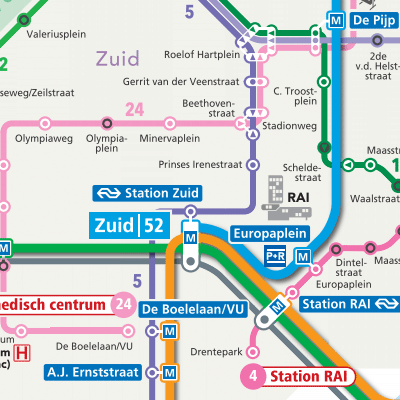
Rail map   tram / train / metro

ov
  Cycling 74 Max v8.1.5  1,990 kB

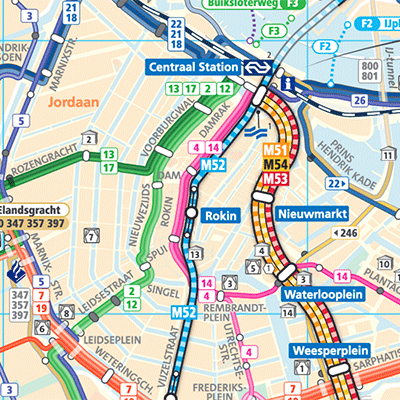
Public transport network map   all routes

ov

Large overview map with all metro, tram, bus, and ferry lines in Amsterdam

  Cycling 74 Max v8.1.5  9.8 MB

The 9 Streets Shopping Guide

ov

Shopping guide to Amsterdam's most interesting shops in the Nine Streets and Jordaan area.

  Cycling 74 Max v8.1.5  2.7 MB

Amsterdam centre map

ov

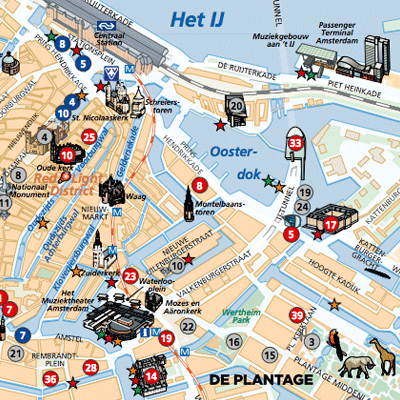
Amsterdam's city centre with museums, places of interest & attractions and canal cruises & boat services featured on the map.

  Cycling 74 Max v8.1.5  2,800 kB

Store Your Luggage Safely in Central Amsterdam

Go and enjoy Amsterdam to the fullest while your belongings are safely stored at Luggage Depot.

Parking Zones and Fees

ov

Detailed map issued by the City of Amsterdam

  Cycling 74 Max v8.1.5  27.1 MB

P+R = Park and Ride Locations

ov

Parking in Amsterdam for 1 euro per 24 hours! Read what you should do and how it works.

  Cycling 74 Max v8.1.5  1,200 kB

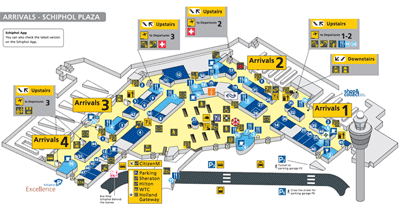
Schiphol Airport Guide Arrivals

ov
  Cycling 74 Max v8.1.5  1.6 MB

Schiphol Airport Guide Departures

ov
  Cycling 74 Max v8.1.5  1.7 MB

Tourist Information

Be well prepared and know what is on in and around Amsterdam. Call, email or visit the official Amsterdam Tourist Office at Centraal Station.

Map of Vondelpark

ov

A map outlining all venues, art and special trees in the park

  Cycling 74 Max v8.1.5  1,262 kB

Perhaps the most significant impact of the 8.1.5 update was its relationship with . As Ableton users demanded more complex devices, Max had to remain rock-solid. This version addressed specific compatibility issues, ensuring that custom-built MIDI effects and instruments performed predictably within the Live environment. For many producers, v8.1.5 was the silent engine that enabled a new wave of generative music tools and bespoke performance interfaces. Conclusion

The defining feature of Max 8 was the system, and v8.1.5 provided essential stability for this paradigm shift. Before MC, managing 16 voices of a synthesizer meant manually duplicating objects or using complex polyphony hacks. MC changed the game by allowing hundreds of channels of audio to flow through a single patch cord. Version 8.1.5 refined the behavior of MC-ready objects, ensuring that complex signal routing remained CPU-efficient. This allowed artists to create massive, immersive soundscapes that were previously too cumbersome to program. Vizzie 2 and Visual Integration

While Max is often associated with audio, its visual component (Jitter) is equally vital. Max v8.1.5 continued to support , a collection of high-level video modules that utilize OpenGL for hardware-accelerated processing. This version ensured that the bridge between audio data and visual manipulation was more seamless than ever. A user could take the amplitude of an MC-signal and use it to modulate a 3D geometry in Jitter with minimal latency, a requirement for high-end professional installations. Integration with Ableton Live

Max v8.1.5 arrived at a time when user experience was becoming as critical as raw processing power. One of the standout features of the Max 8 era was the massive improvement in UI responsiveness and the introduction of the "Patcher Launcher," which streamlined how users interacted with their projects. In v8.1.5, Cycling ’74 focused heavily on "quality of life" improvements—fixing persistent bugs in the UI and ensuring that the patcher window remained fluid even when handling complex, data-heavy visualizations. The Power of MC (Multi-Channel)

In the landscape of creative coding and interactive multimedia, Cycling ’74’s Max has long stood as the gold standard for visual programming. By the time version 8.1.5 was released, the platform had transitioned from a niche tool for academic composers into a powerhouse for live performers, installation artists, and software developers alike. This specific iteration, while part of the broader Max 8 lifecycle, represents a crucial point of refinement, focusing on stability, performance, and the deepening integration of the "MC" (Multi-Channel) ecosystem. The Architecture of Workflow

The Evolution of Modular Sound: Exploring Cycling ’74 Max v8.1.5

Cycling ’74 Max v8.1.5 may seem like a minor dot on a long timeline, but it represents the "polishing" phase of a revolution in modular software. By prioritizing stability in the MC ecosystem and refining the interface, it empowered creators to stop worrying about the software’s limits and start focusing on the limits of their own imagination. It remains a testament to the idea that for a creative tool to be truly effective, it must be as reliable as it is flexible.